
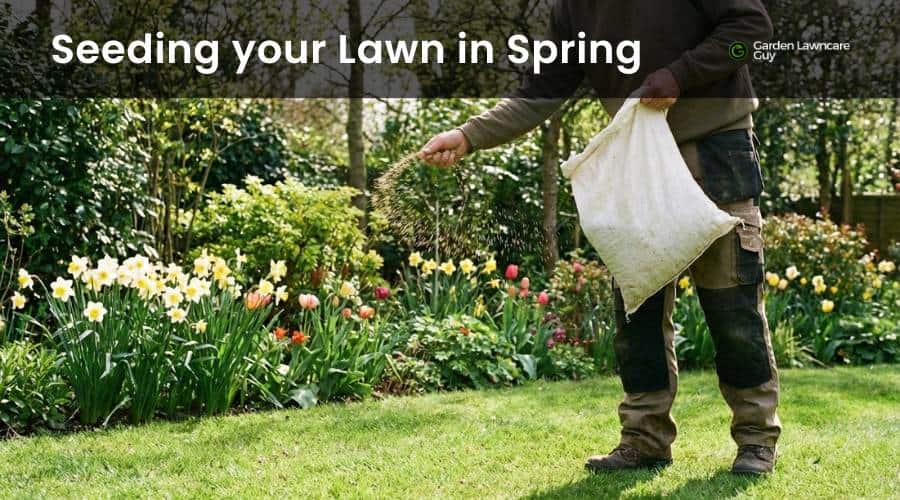
If you are trying to figure out when plant grass seed spring in the UK, you are not alone. Spring feels like the obvious time to fix bare patches, start a new lawn, or overseed after winter, but the weather can turn quickly. This guide shows you the best spring timing, the temperature and frost checks that matter, and a step-by-step method that helps grass seed germinate evenly.
For most UK gardens, the safest spring window is mid April to late May, when the soil has warmed and nights are less frosty. You can sometimes start earlier in milder areas, but only if your soil is warm enough and the forecast is stable.
For the full UK sowing calendar, see our guide: When to Sow Grass Seed UK
Why Spring Seeding Can Be Tricky
Spring lawn seeding usually goes wrong for three reasons:
- The soil is still cold, so seed sits there doing nothing (or rots).
- A late cold snap hits right as the seed is trying to germinate.
- A dry spell arrives, the top layer dries out, and germination stalls.
If you can keep the surface lightly moist and avoid frost, spring seeding can work very well.
When Plant Grass Seed Spring In The UK?
If you want one month to aim for, April is often the sweet spot, with May a close second. March can work in sheltered, warmer gardens, but it is also the month that catches people out.
March
- Good for: small patch repairs in sunny, sheltered spots, especially in southern areas.
- Risk: soil stays cold, nights can still freeze, and germination is slow.
- Best approach: treat March as a small trial area first, not a full lawn renovation.
April
- Good for: new lawns, bigger repairs, and overseeding in spring.
- Why it works: the soil temperature for grass seed is more likely to reach a reliable level, and spring rain often helps with moisture.
- Watch out for: a warm weekend followed by a cold week. Do not rush just because the air feels mild.
May
- Good for: quick establishment before summer use, especially if you can water.
- Risk: dry weather can arrive quickly. If you cannot water, May seeding becomes a gamble.
- Best approach: focus on seed-to-soil contact and moisture from day one.
When Not To Seed In Spring
Avoid sowing grass seed when:
- The ground is waterlogged or you can squeeze water out of the soil.
- Frost is still common in your garden at night.
- You cannot water and the forecast is turning dry for more than a few days.
- You have just applied a weed control product that could interfere with germination (always check the label on anything you apply).
This is why the best time to sow grass seed is not just a date on the calendar. It is the point where soil warmth, moisture, and stability meet.
What Temperature Is Best For Grass Seed In Spring?
Temperature matters more than the calendar. The goal is to sow when the soil is warm enough for germination and the trend is improving, not bouncing up and down.
The Simple Temperature Rule
- Minimum: aim for about 10°C soil temperature as a practical starting point.
- Better: closer to 12 to 15°C for quicker, more even germination.
- Consistency: you want that minimum to hold for about a week, not just a single warm afternoon.
A basic soil thermometer makes this easy, but you can also use a common-sense check. If daytime temperatures have been mild for a week and nights are no longer close to freezing, the soil is usually warming.
How To Think About Frost Risk
Frost risk is about your garden, not the county you live in. Shaded lawns, low spots, and exposed front gardens often hold cold longer.
Use this quick check before spring lawn seeding:
- Look at the 7 day forecast for night temperatures.
- If you are seeing repeated nights near 0°C, wait.
- If nights are safely above that and daytime temperatures are rising, seed.
If you do get a surprise cold snap after sowing, do not panic. Seed can sit safely for a while if the soil stays damp. The bigger risk is germination starting, then freezing. That is why stable conditions matter.
How Do You Sow Grass Seed In Spring?
This method works for patch repairs, overseeding, and new lawns. The difference is how much preparation you do.
Step 1: Choose The Right Day
Pick a day with:
- Light wind (so seed spreads evenly)
- A moist surface (not muddy, just slightly damp)
- A forecast that is mild and showery, rather than hot and dry
Step 2: Prep The Surface Properly
For patch repairs:
- Remove dead grass and loose thatch so you can see soil.
- Loosen the top 1 to 2 cm of soil with a rake or hand tool.
- If the area is compacted, spike or aerate lightly so water can soak in.
For overseeding:
- Mow a little shorter than usual.
- Rake or scarify lightly to open up the surface and improve seed-to-soil contact.
- Clear debris so the seed can reach soil rather than sitting on old grass.
For a new lawn:
- Remove weeds and stones.
- Level the area so water does not pool.
- Firm the soil with your feet (small shuffling steps) so you do not end up with a soft, uneven surface later.
- Rake again to create a fine, crumbly seedbed.
Step 3: Add A Starter Feed (Optional But Helpful)
A starter fertiliser can help with early root development, especially in spring when growth can be slow. Keep it light and follow the recommended rate. Too much fertiliser can scorch seedlings.
Step 4: Sow In Two Directions
- Divide your seed in half.
- Sow one half walking north to south.
- Sow the other half walking east to west.
This reduces stripes and patchy coverage, especially if you are seeding by hand.
Step 5: Lightly Cover And Firm In
Grass seed needs contact with soil but should not be buried deeply.
- Rake very lightly so the seed is just tucked in.
- Aim for seed to sit roughly 5 to 10 mm into the surface, not centimetres down.
- Firm with your feet or a roller so wind and birds do not move the seed.
If you are top dressing, use a thin layer. A heavy layer can smother seedlings.
Step 6: Protect The Area
Spring pests and foot traffic can ruin a new sowing.
- Keep pets off the area.
- Use temporary fencing if needed.
- In problem spots, a light covering such as fine netting can help deter birds (remove once seedlings appear).
Step 7: First Mow Timing
Wait until the new grass is:
- roughly 5 to 7 cm tall, and
- rooted enough that it does not lift when you gently tug a blade
Then mow on a higher setting and take off only the tips. A blunt mower can pull seedlings out, so make sure the blade is sharp.
How Often Should You Water Grass Seed In Spring?
Watering is where most spring sowings succeed or fail. You are not trying to drench the ground. You are trying to keep the top layer consistently damp until germination is well underway.
The Golden Rule
Keep the top 1 cm of soil lightly moist, not soggy, for the first few weeks.
Spring Watering Schedule
This schedule assumes normal UK spring conditions. Adjust if it is very wet or unusually warm.
Days 1 to 7 (Before You See Green)
- Water lightly 1 to 2 times per day if there is no rain.
- The surface should look damp, not puddled.
- If it is windy or sunny, you may need a brief extra misting.
Days 8 to 21 (Germination And Early Roots)
- Water once per day, slightly longer than week one, unless you get rainfall.
- If the surface dries out between watering, go back to lighter and more frequent.
Weeks 4 to 6 (Building Strength)
- Reduce frequency to 2 to 3 times per week.
- Increase depth so water reaches the developing roots.
- The goal is to encourage roots to grow down, not stay at the surface.
Practical Tips That Make Watering Easier
- Water early morning if possible, and top up later only if the surface is drying.
- Use a gentle spray. A hard jet can wash seed into piles.
- Watch for dry edges along paths and borders. They often dry first.
- In a dry spring, a light top dressing can help hold moisture and reduce surface crusting.
Common Spring Seeding Mistakes
Spring is workable, but it punishes small mistakes. Here are the ones I see most often.
Seeding Too Early Because It Feels Warm
A mild weekend does not mean the soil is ready. If you seed too early, you often end up reseeding later anyway.
Letting Seed Dry Out Even Once
Grass seed can pause if it dries, but it often loses momentum. That is why the first two weeks matter so much.
Overwatering And Washing Seed Away
Puddles, channels, and shiny surfaces are warning signs. Water little and often, then shift to deeper watering later.
Ignoring Slugs And Other Pests
Slugs love tender seedlings and can graze a new patch overnight.
- Keep the area tidy and remove hiding places like boards and thick debris.
- Water in the morning rather than late evening where possible.
- In problem areas, protect seedlings early rather than reacting once damage appears.
Covering Seed Too Deep
Buried seed struggles. Light coverage is enough. You want seed to touch soil, not sit in a trench.
Mowing Too Soon Or Too Low
Cutting too early can pull seedlings out. Cutting too low can stress young grass and expose soil, which encourages weeds.
Feeding Too Hard, Too Soon
A spring lawn feed is great for an established lawn. For new seed, a starter feed is usually the better choice first, then a normal feed later once the lawn is established and you have mown a few times.
For the best chance of succuess read our guide to avoid the 6 Biggest Mistakes when seeding
FAQ
Can I Sow Grass Seed In March In The UK?
Sometimes, yes. March can work for small repairs in sunny, sheltered gardens, especially in southern areas. For bigger jobs, waiting until April usually gives better, more consistent results.
How Long Does Grass Seed Take To Germinate In Spring?
It depends on the mix and the weather. In good conditions you might see seedlings in 7 to 14 days, but cooler spells can stretch that to 3 to 4 weeks. Keep the surface damp and do not assume failure too quickly.
Does Grass Seed Need To Be Covered With Soil?
Lightly, yes. Grass seed needs contact with soil and protection from drying, birds, and being blown away. A very light rake in or thin top dressing is plenty. Do not bury it deep.
Can I Just Throw Grass Seed Down?
You will waste a lot of seed if you do. The difference between success and disappointment is nearly always seed-to-soil contact. Even for overseeding, a quick rake or light scarify makes a big improvement.
When Can I Walk On Newly Seeded Grass?
Avoid walking on it until after the first mow, and even then keep traffic light. Roots are shallow at first and footprints create dips that hold water and damage growth.
Should I Fertilise Before Or After Seeding?
If you are using a starter fertiliser, apply it at sowing time (or rake it in just before). Save stronger feeds until the lawn is established and has been mown a few times.
What We Recommend
You do not need a shed full of kit to get spring seeding right. A few well chosen items make the process easier and improve success rates.
- A hand held rotary spreader for even application in small and medium gardens.
For A Darker, Denser Finish
- Dark Green Grass Seed if your priority is colour and a dense look once established.
For Family Lawns And High Use Areas
- Premium Hardwearing Grass Seed if you need better wear tolerance for kids, pets, or regular foot traffic.
For Better Rooting From The Start
- Pre Seed and Turfing Fertiliser as a starter feed to support early root development.
- Once the lawn has had a few mows, switch to a spring and summer or Autumn Winter lawn feed for steady growth and colour.
For Prep That Makes Seeding Work
- A manual lawn scarifier to remove thatch and open the surface before overseeding.
- A stainless steel bow rake for creating a fine seedbed and lightly covering seed.
- A lawn aerator if your soil is compacted or you see water sitting on the surface.
Final Tips And Seasonal Reminder
Spring seeding is all about timing and moisture. Wait for soil warmth, keep the surface damp, and protect seedlings from stress. If you sow in late April or May, stay on top of watering as early summer dry spells can arrive without much warning.




[…] my spring lawn care regime linked here Level Lawn and Overseeding – Spring Lawn Care Part 2 the lawn is starting to bounce back into shape. I’ve still got a few […]