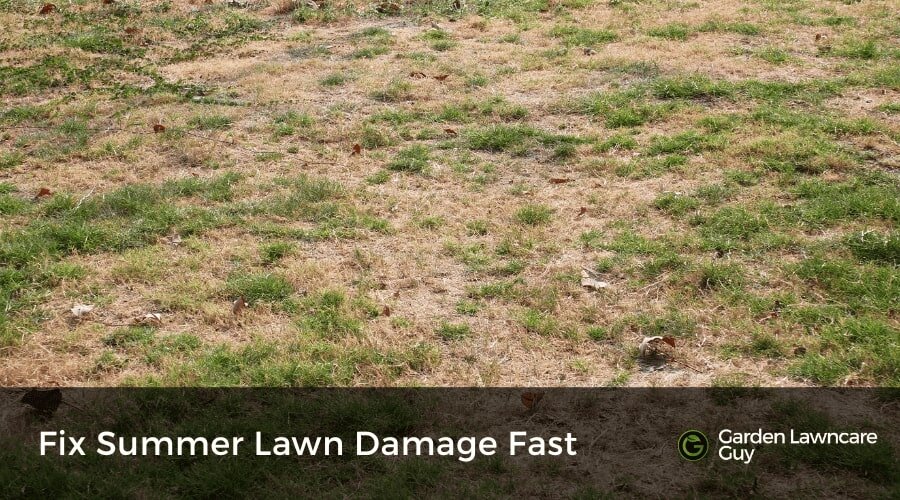
If you are staring at a tired, patchy lawn after a hot spell and wondering how to fix summer lawn damage, you are not alone.
This guide explains what is really happening to the grass, how to tell dormant from dead, and the practical steps to take to fix your lawn.
- Why Lawns Turn Brown In Summer
- Will My Lawn Recover After Summer Drought Or Is It Dead?
- How do I fix summer lawn damage?
- How Do I Fix Brown Patches In My Lawn In Summer?
- Should I Water Brown Grass Or Wait For Rain?
- When Is The Best Time To Repair A Lawn After Heat Damage?
- What Seed Is Best To Repair Drought-Damaged Lawns In The UK?
- How Do Wetting Agents Help A Dried-Out Lawn?
- Common Mistakes To Avoid
- Final Tips And Seasonal Reminder
Why Lawns Turn Brown In Summer
Brown grass does not always mean dead grass. In heat or drought, most grass in the UK enter a protective rest phase called dormancy.
Growth slows and leaf blades go dry and brown. The plant concentrates energy in the crown and roots. Once moisture returns and soil temperatures moderate, new green growth resumes.
Two factors make a drought-damaged lawn look worse than it is:
- Compaction and hydrophobic soil
- Baked, compacted surfaces shed water. Even when you water, it can run off or sit on top rather than soaking down to the roots. This is common on footfall routes, trampoline rings, and where paddling pools sat.
- Uneven stress and thatch
- Thatch and shallow rooting create hot spots that scorch first.
Key point: if the crowns at the base of the leaves are pale but firm and the turf is still anchored, the plant is likely dormant. If crowns are soft or crumbly and the plant pulls away easily, that area needs reseeding.
Will My Lawn Recover After Summer Drought Or Is It Dead?
Use these quick checks to decide if you have dormancy or dead patches.
The tug test
- Pinch a brown tuft close to the soil and tug gently. If it resists and you see pale green at the base, the plant is alive. If it slides out with crisp, straw-like roots, that spot has died and you will need to overseed your lawn.
The soak-and-watch check
- Choose a small 1 metre square. Water deeply once with a watering can, or time your test before forecast rain. In 7 to 10 days you should see new green tips if the area is mainly dormant.
The footprint test
- Walk across the lawn. If footprints linger as dark depressions, the grass is wilted and thirsty but may still recover. If the blades feel brittle and snap, reseed those areas.
Look for patterned damage
- Rings from furniture or paddling pools point to heat scorch at the surface. Dog urine creates a dark green edge with a tan centre. Fertiliser stripes show as light and dark bands. These tell you the cause, and the repair follows the cause.
If most of the lawn passes the tests, plan to renovate lightly and overseed your lawn. If more than a third is genuinely dead, treat it like a new lawn in sections.
Recommended Products
 From: £15.99Select options This product has multiple variants. The options may be chosen on the product page
 From: £20.99Select options This product has multiple variants. The options may be chosen on the product page

How do I fix summer lawn damage?
Here is the step by step plan that works for most UK gardens in late summer.
1) Pre-wet and loosen the surface
- Water the day before your plan to complete your lawn care, or wait for a showery forecast. Use a wetting agent on stubborn dry areas to help water penetrate. Lightly spike the lawn with a garden fork at 10 to 15 cm spacing. This opens channels for moisture and seed.
2) Mow correctly
- Cut your lawn short before overseeding but avoid scalping the lawn. Collect clippings if there is heavy thatch. Keep mower blades sharp to prevent frayed tips that brown quickly.
3) Scarify lightly
- Use a rake or a light setting on a scarifier to remove thatch or debris. You are not trying to strip the lawn bare, just tidying it up so new shoots can come through.
4) Topdress where uneven
- Brush a thin layer of lawn topdressing over low spots and high-wear marks. Aim for no more than 0.5 cm at a time. This levels the surface and improves seed-to-soil contact.
5) Overseeding
- Spread a high quality grass seed mix at the recommended rate over the whole lawn, then add an extra pass on bare patches. Overseeding is the fastest way to refresh a drought-damaged lawn because you introduce new, vigorous plants. Lightly rake seed into soil to ensure good seed to soil contact or spread thin layer of screened topsoil over the seeds.
6) Maintain moisture during the germination phase
- Keep seeds moist in soil during the germination phase. Water at least twice per day if no rain is forecast.
7) Protect and mow
- Keep off grass until the new seeds are fully established (1-2 inches). Then do your first cut on a high setting. Feed your lawn with the dark green lawn granular feed to feed it with essential nutrients. Switch to the dark green autumn / winter feed from october through till april.
This sequence restores colour, evens out texture, and sets you up for a strong autumn. To maintain a lush and healthy lawn follow these autumn lawn care tips.
How Do I Fix Brown Patches In My Lawn In Summer?
Brown patches are a symptom, not a diagnosis. Fix the cause and the patch recovers. Here are the common culprits and the fix.
Drought hot spots
- Traits: dry, crispy, often on mounds, edges, or compacted paths.
- Fix: spike, apply a wetting agent, pre-wet, then overseed. Topdress to improve moisture retention. Keep the area evenly moist while seed establishes.
Pet urine scorch
- Traits: tan centre with a lush dark green ring. Often appears where dogs visit.
- Fix: drench the area with water as soon as you notice. Rake out dead fibres and sprinkle a little topdressing. Overseed and keep moist. Train pets to use a designated section if possible.
Blunt-mower scorch
- Traits: tips look white and shredded. Whole lawn can look dull.
- Fix: sharpen or replace the blade. A clean cut reduces moisture loss. A light feed and regular watering help recovery.
Fertiliser stripes
- Traits: light and dark bands that follow spreader paths.
- Fix: water thoroughly to dilute. In future, halve the rate and apply in two directions, or use a hand spreader to achieve even coverage.
Wear and furniture scorch
- Traits: perfect circles where paddling pools, bins, or trampolines sat.
- Fix: rake, topdress, and overseed. Rotate furniture weekly in hot weather to prevent repeats.
By treating the cause, you remove the need to repeatedly patch the same areas.
Should I Water Brown Grass Or Wait For Rain?
For established lawns, watering is often optional in summer. Grass copes with a short drought by going dormant. If your region has restrictions in place, prioritise new seed and very young turf. Use a watering can to target only the areas that need it.
Guidelines for efficient watering:
- New seed and seedlings need little and often. Moisten the top 1 to 2 cm, then allow the surface to just begin to lighten before the next session.
- Established turf prefers deep, infrequent water. If you choose to water, aim for a thorough soak that reaches 10 to 15 cm deep, then leave several days between sessions.
- Water early morning or evening to reduce evaporation loss.
- Use a wetting agent first on stubbornly dry areas so your water actually goes where it is needed.
If rain is forecast within a few days, prepare the lawn by spiking and applying a wetting agent so the rainfall works twice as hard for you.
When Is The Best Time To Repair A Lawn After Heat Damage?
Late summer into early autumn is the sweet spot in the UK. Soil is warm, nights are cooler, and rain is more regular. That is ideal for overseeding and root growth. Aim to complete renovation and overseeding by mid autumn, then switch to gentle tidy-ups as growth slows.
A simple calendar you can follow:
- August: assess damage, sharpen the mower, start light spiking, treat hydrophobic areas, and plan materials. If a cooler, damp week arrives, begin to prep for overseeding.
- September: the main renovation window. Scarify, topdress, seed, and apply a suitable feed. Water frequently during the germination phase if there is little or no rain forecast.
- October: continue mowing high as needed, patch seed any thin spots, and tidy leaves promptly so they do not smother seedlings.
What Seed Is Best To Repair Drought-Damaged Lawns In The UK?
Choose mixes that balance resilience with a fine, neat finish. A typical blend for renovation includes:
- Fescues for drought tolerance and fine texture. Hard fescue and creeping red fescue are excellent at coping with dry spells and poor soils.
- Perennial ryegrass for quick germination and wear tolerance. Modern dwarf types create a neat finish and fill gaps fast.
- Smooth-stalked meadow grass in smaller amounts for improved recovery and rhizomes that knit patches together over time.
Tips for seed success:
- Match the mix to your garden. Shady, dry corners benefit from higher fescue content like our shade and sun grass seed mix . High-traffic play lawns benefit from a mix with a little more ryegrass in it like our premium hardwearing.
- Buy fresh seed and store it cool and dry until use.
- Follow the stated sowing rate. Too thin and weeds invade, too heavy and seedlings compete. If in doubt, sow a touch heavier on bare patches and standard rate on the rest.
Selecting the right seed is the most effective change you can make as you refresh a drought-damaged lawn.
How Do Wetting Agents Help A Dried-Out Lawn?
Wetting agents are soil surfactants that help water spread and soak into dry, water-repellent soil. If water beads on the surface or runs off even after rain, you likely have hydrophobic zones. A wetting agent can transform your results by getting moisture back into the root zone.
How to use them well:
- Spike first to open pathways.
- Apply the wetting agent evenly at the stated rate.
- Water in lightly, or time the application just before a rainy day. The first wetting breaks surface tension and draws moisture down.
- Repeat at intervals if the label suggests, especially on the sunniest, most compacted sections.
Pairing a wetting agent with overseeding and topdressing creates the most noticeable improvement in recovery speed and colour.
Recommended Products
 From: £23.99Select options This product has multiple variants. The options may be chosen on the product page
 From: £15.99Select options This product has multiple variants. The options may be chosen on the product page
Common Mistakes To Avoid
Avoid these pitfalls and your recovery will be quicker and easier.
- Mowing too short
- Scalping weakens roots and exposes soil to sun. Stay at 5 to 6 cm in summer and during recovery.
- Heavy feeding in heat
- Strong fertiliser in hot, dry weather can scorch. Use a gentle feed or wait until temperatures ease. Water in any feed to protect leaves.
- Overwatering or shallow watering
- Constant misting encourages shallow roots. For seedlings, little and often is right. For established turf, water more deeply but less often.
- Deep hollow-tining in drought
- Removing cores in very dry weather increases evaporation. Save deeper aeration for autumn when moisture is reliable. Use solid tines or a fork now.
- Skipping wetting agents on stubborn dry patches
- If the soil repels water, you waste effort. A wetting agent helps moisture penetrate deep into the soil.
Final Tips And Seasonal Reminder
- Think in zones. Most lawns do not fail everywhere at once. Tackle the worst areas first so the whole lawn looks better quickly.
- Keep traffic light while seedlings establish.
- Do a 10 minute weekly tidy. Edge, remove leaves, and touch up thin areas with a pinch of seed. Small, regular actions compound into a big result.
- Look ahead to autumn. Order seed, a light topdressing, a suitable feed, and a wetting agent now so you are ready to go when the weather turns helpful.
With a clear plan and the right materials, you can fix summer lawn damage and step into autumn with a greener, thicker sward that shrugs off heat far better next year.