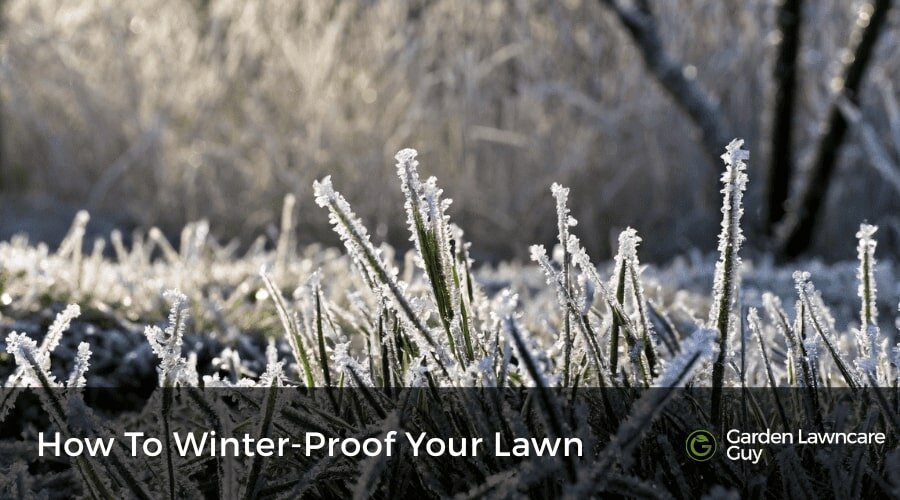
As temperatures drop across the UK, lawns face a tough stretch of cold, damp weather and reduced daylight. This guide shows you exactly what to do now so your grass survives winter and bounces back strong in spring.
We will cover the right mowing height, whether to aerate, what type of feed to use, how to handle leaves and moss, and how to reduce frost and water damage.
- Why Lawns Struggle In Winter (And What You Can Do)
- Quick Checklist To Winter Proof Your Lawn
- What Height Should I Cut My Lawn Before The First Frost?
- Should I Aerate My Lawn In Autumn Or Leave It For Spring?
- Can I Overseed My Lawn In Winter In The UK?
- How Do I Protect Grass From Frost And Snow Damage?
- Do I Need A Winter Fertiliser When Feeding now?
- How Do I Improve Lawn Drainage?
- Common Mistakes To Avoid
- What About Moss And Shade During Winter?
- Final Tips And Seasonal Reminder
Why Lawns Struggle In Winter (And What You Can Do)
Winter brings three main stressors: low soil temperatures, persistent moisture, and limited light.
Together, these slow grass growth, increase disease risk, and invite moss. Here are some simple tips to help your lawn survive the winter:
- Prioritise autumn lawn preparation while soil is still workable. Finish major tasks 2 to 4 weeks before your area’s typical first frost.
- Keep the final cut slightly higher than summer. A sensible target is around 3 to 4 cm. This helps the plant hold enough leaf to photosynthesise without forming long, floppy blades that mat down and invite disease.
- Remove leaves quickly. A light, frequent tidy prevents smothering and reduces moisture on the leaf surface.
- Improve air and water movement. Targeted aeration reduces waterlogging, protect roots, and discourage moss.
- Applying Liquid Gypsum can also help improve soil structure which can help with drainage.
- Feed your lawn with a specialized autumn/winter lawn feed which supports root strength without forcing soft growth.
These steps align with winter lawn care UK best practice: do the bulk of the work while the soil is still warm enough to respond, then switch to gentle, protective habits once frosts are frequent.
Quick Checklist To Winter Proof Your Lawn
Use this short list to guide your work in the run-up to winter:
- Final Mow: Aim for 4 to 5 cm. Avoid scalping. Get your lawn mow in before frosty conditions set in.
- Debris Removal: Rake or collect leaves weekly so the grass stays dry and well lit.
- Targeted Aeration: Spike compacted or puddling areas to a depth of 7 to 10 cm to improve lawn drainage. If required apply liquid gypsum to help.
- Overseed Thin Patches (Autumn): Use a winter active mix that germinates in lower temps. Stop once night temperatures consistently drop near freezing.
- Late-Autumn Feed: Choose a specialised autumn/ winter feed. Water in if conditions are dry.
- Moss Watch: Shady, damp spots are high risk. Keep them clear of leaves and debris. Cut back trees/ shrubs if possible.
- Traffic Rules: Avoid walking on frosted grass. Use paths or boards in persistently wet spots.
This checklist helps protects the grass now and sets you up for a faster, thicker spring recovery.
Recommended Products
- From: £20.99Select options This product has multiple variants. The options may be chosen on the product page

What Height Should I Cut My Lawn Before The First Frost?
For UK lawns aim for an approx height around 4 to 5 cm strikes the right balance. Here is why it works:
- Too short and you expose crowns to cold and stress the plant when growth is already slow.
- Too long and the blades fold, trap moisture, and create conditions where disease and moss thrive.
Practical tips:
- If your lawn is currently higher than 6 cm, reduce height gradually over two or three cuts.
- Never mow if the lawn is frosty or waterlogged. Wait until it has thawed and surface moisture has lifted.
- Keep your blade sharp to avoid tearing the leaf.
This single adjustment is one of the easiest ways to protect grass from frost while keeping disease pressure down.
Should I Aerate My Lawn In Autumn Or Leave It For Spring?
If your soil is compacted or you notice puddles after rain, autumn aeration is ideal because the soil is still warm enough to respond.
Spiking helps oxygen reach roots and improves surface drainage ahead of months of wet weather. Focus on high-traffic areas, gates, and where mower wheels turn.
How to do it well:
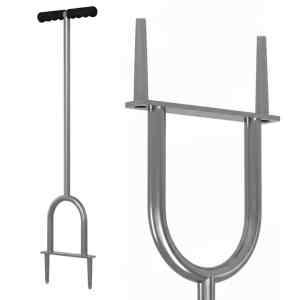
- Use a garden fork or spike aerator to create holes 7 to 10 cm deep, spaced a shoe-length apart.
- On heavy clay, lean the fork slightly to open each hole, then brush a light, sandy topdressing across the surface to fill holes and promote drainage.
- If your lawn is already saturated or temperatures are close to freezing, pause heavy work and protect the surface from further compaction. You can revisit core work in spring.
By completing this step early, you set up better winter resilience and improve lawn drainage before the prolonged rains.
Can I Overseed My Lawn In Winter In The UK?
This depends on the soil temperatures. If you choose a winter active grass seed that germinate in lower temps, this can normally be applied in autumn if temperatures are suitable.
For instance our cold pro grass seed mix can germinate in soil temperatures of 5 degrees plus so this is the best option for seeding in late autumn.
If you missed the autumn slot start planning your next window in spring
How Do I Protect Grass From Frost And Snow Damage?
Think about frost and snow as a pressure test on leaf tissue and soil structure:
- Avoid traffic when frosty. Walking on frozen blades can cause leaf fracture, leaving silvery footprints that turn brown.
- Keep the lawn tidy. Remove leaves, toys, and furniture so moisture does not collect and shade does not increase.
- Hold the right height. The 4 to 5 cm target gives protection without matting down.
- Encourage airflow. Trim back encroaching borders or low branches to increase winter light and air movement.
If heavy snow arrives and lingers, avoid piling more snow from paths onto the lawn. Once snow melts, resume light debris removal and allow the surface to drain before mowing again.
Do I Need A Winter Fertiliser When Feeding now?
A measured, late-autumn feed helps the root system and supports colour without pushing soft growth. Look for a specialised autumn/winter feed that has the right level of nutrients to suit the lawns needs at this time of year.
Apply when the ground is not frozen or waterlogged. Water in if conditions are dry.
General rules:
- Do not apply high nitrogen in mid-winter. Save growth-driven feeding for spring when the lawn can use it.
- Avoid feeding if a hard frost is expected within 24 to 48 hours.
- Spread evenly. A simple hand spreader helps to get even coverage and prevents patchiness.
A sensible nutrition plan is a key part of winter lawn care UK and helps the lawn green up more evenly in spring.
How Do I Improve Lawn Drainage?
Improving drainage in compacted lawns is a key step to preventing your lawn from waterlogging:
Aeration
Aerating your lawn involves creating small holes in the soil to allow air, water, and nutrients to penetrate the root zone. Use a garden fork or a specialized aerating tool to puncture the soil. For larger lawns, consider renting a mechanical aerator.
Apply Liquid gypsum Soil Improver
Gypsum is calcium sulphate. In the right conditions, calcium helps soil particles come together into bigger crumbs that let water and air pass more freely. This is called flocculation.
Liquid gypsum for lawns is simply gypsum presented in a sprayable form, which makes it quick to apply evenly across established turf.
Adding Top Dressing
After aeration, apply a thin layer of sand or a sand-soil mix over the lawn if weather is suitable and temps aren’t too low. This helps improve soil structure and drainage.
Install Drainage Systems
For persistent drainage issues, consider installing French drains or a network of pipes to help divert water away from your lawn.
Common Mistakes To Avoid
- Scalping Before Winter: Cutting too low raises disease risk and weakens the plant. Stick to 4 to 5 cm for the final height.
- Mowing In Frost: Frozen blades shatter and bruise. Wait for a thaw and a dry surface.
- Ignoring Leaves: A dense layer of leaves shades the lawn, holds moisture, and invites mould. Clear little and often.
- Overfeeding In Mid-Winter: Heavy nitrogen in cold weather pushes weak growth that marks easily and can increase disease pressure so go for an autumn feed which is lower in nitrogen.
- Heavy Traffic On Wet Soil: Repeated footfall compacts soil, forcing water to pond. Stay to paths and spread the load.
What About Moss And Shade During Winter?
Moss thrives where grass struggles: shade, damp, and low fertility.
Winter often checks grass growth while moss stays active. Your best strategy is to tilt the site conditions toward grass and away from moss:
- Keep the lawn free of leaves to increase winter light.
- Improve airflow by trimming back low branches and hedging where you can.
- Aerate compacted and wet areas in autumn to reduce waterlogging.
Managing shade and moisture now sets you up for cleaner spring work.
Bestselling Lawncare Products
- From: £15.99Select options This product has multiple variants. The options may be chosen on the product page
-
- From: £11.99Select options This product has multiple variants. The options may be chosen on the product page


Final Tips And Seasonal Reminder
As we head through November and into the coldest months, think of winter care as a gentle routine rather than big projects. Do the heavy lifting in autumn, then protect what you have:
- Maintain the 4 to 5 cm height, cut only on dry, thawed days.
- Keep on top of leaves and light debris to minimise disease pressure.
- Prevent compaction with smart traffic habits and simple boards where needed.
- Watch for pooling water after heavy rain and spike those spots at the next workable chance.
Protecting your lawn over winter can really help it bounce back quicker in spring.