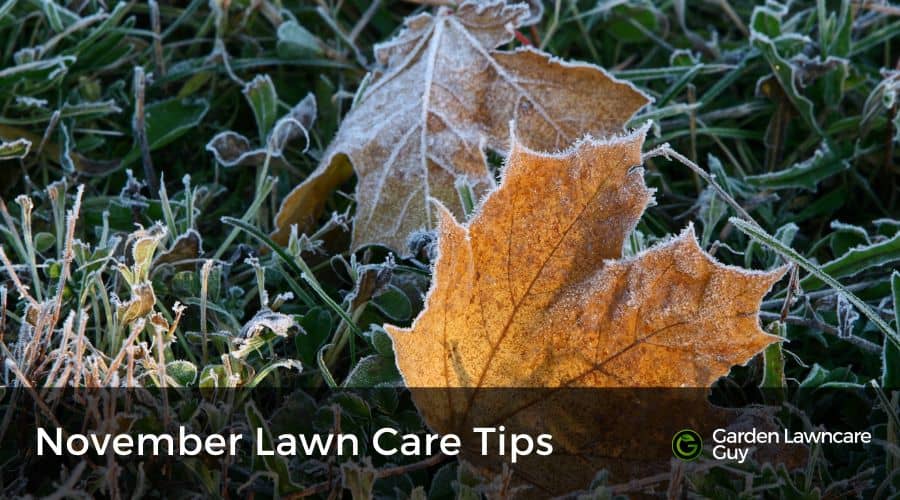
November is when most UK lawns shift from growing to simply coping. These November Lawn Care Tips: Protect Your Lawn This Winter focus on keeping grass clean, upright, and stress-free so it comes through winter with fewer bare patches, less moss, and less mud..
Quick Tips To Protect Your Lawn This Winter
Think of November lawn care as protection, not perfection. Your main jobs are to stop the lawn smothering, stop it compacting, and help it drain.
Keep The Surface Clear
- Remove fallen leaves before they form a wet mat that blocks light and air.
- Pick up sticks and debris that can cause dead patches underneath.
Reduce Compaction Before Winter Sets In
Compaction is a big reason lawns turn muddy and thin over winter.
- Avoid heavy use when the ground feels soft or spongy.
- If the lawn is already compacted, use a spike aerator to gently spike the worst areas during a drier spell.
- Keep repeated foot traffic to one route so wear is not spread across the whole lawn.
Improve Drainage Without Making A Mess
You can help water move away from the surface without a big renovation.
- Clear blocked drains, gullies, and channels near the lawn edge.
- Brush away worm casts when they dry to stop smearing and sealing the surface.
- Liquid gypsum can help improve drainage by encouraging clay particles to clump together into larger aggregates, which opens up tiny channels in the soil so water can soak through more easily instead of sitting on the surface.
- If puddles always form in the same spot, mark the area and plan a proper fix for spring.
Recommended Products
- From: £20.99Select options This product has multiple variants. The options may be chosen on the product page

- From: Original price was: £16.99.£11.99Current price is: £11.99.Select options This product has multiple variants. The options may be chosen on the product page

Should I Mow My Lawn In November?
Sometimes, yes, but only when conditions are kind.
- Mow only during mild spells when the ground is firm enough to walk on without leaving deep footprints.
- Raise your cutting height. For most family lawns, aim to finish around 4 to 5cm.
- Keep the cut light. If the grass has shot up after a mild week, take a small amount off and return a few days later rather than scalping it.
- Use sharp blades so you get a clean cut.
Skip mowing if the lawn is frosty, waterlogged, or the grass has clearly stopped growing.
What’s The Best Way To Deal With Leaves?
Wet leaves are one of the quickest ways to weaken a lawn in November.
How Often Should I Clear Them?
Clear leaves at least weekly. In heavy leaf fall, every few days is better. If you can see leaf cover building up, the grass underneath is already losing light.
Rake, Blow, Or Mow?
- Raking is best when leaves are dry and loose.
- If leaf cover is light and the grass is dry, you can mow with a collection box to lift and collect leaves, but avoid doing this when the ground is soft.
Do not leave a layer of mulched leaves on the lawn in November. It can sit wet and encourage moss and disease.
Can I Fertilise The Lawn In November?
Sometimes, but timing and product choice matter.
When It Makes Sense
A late-autumn or winter fertiliser can help harden grass against cold and wear. Early November in milder areas can be suitable.
When To Skip It
Avoid feeding if the ground is waterlogged, frozen, or covered in frost, or if growth has stopped for the season.
What To Look For
Choose a specialized autumn / winter feed as these have lower nitrogen in and higher in potassium which is better for your lawn during winter conditions. Apply only to a dry leaf, and ideally when rain is expected within a day or two to wash it in.
For best results apply using a spreader to get even coverage.
Should I Treat Moss In November?
You can, but only under the right conditions.
Why Moss Takes Off Now
Short days, damp surfaces, and leaf cover create the low-light, wet conditions moss loves. Thin grass and compaction make it worse.
What Works In Late Autumn
An iron-based moss treatment can blacken moss in cool weather, but it works best when you can keep the lawn clear afterwards.
- Treat during a mild spell.
- Once moss darkens and dries, gently rake out loose debris on a dry day.
- Do not rip out the lawn aggressively in November. Save hard raking and reseeding for spring.
Is It Too Late To Sow Grass Seed?
It depends on the temperatures. It is best to use a cold tolerant grass seed if you overseed in November. The cold pro grass seed mix germinates from temperatures of 5 degrees plus wheras most other mixes needs higher temps to germinate.
When It Might Work
If you are in a mild coastal area and the soil is still holding warmth, you may get results in early November. Seed needs enough warmth to germinate and establish before winter turns harsher.
Safer Options
- Leave seeding until spring, when germination is more predictable.
- If you need a quick fix for a worn patch, consider lifting and relaying small pieces of turf during a mild spell (as long as the ground is not waterlogged or frozen).
- Mark thin areas now so you can tackle them properly in March or April.
Common Mistakes In November
- Cutting the lawn too short before winter, which leaves it weak and open to moss.
- Walking on frosty grass, which crushes brittle blades and leaves dark footprints and scuffs.
- Trying to renovate on saturated soil, causing compaction and messy damage that lasts all winter.
- Leaving heavy leaf cover, which smothers grass and encourages disease.
- Feeding with high nitrogen late in the year, which pushes soft growth.
- Raking or mowing when the lawn is wet, which tears grass and spreads problems.
Quick November Lawn Care Checklist
- Clear leaves once a week, more often in heavy leaf fall.
- Mow only in mild, dry spells and finish at roughly 4 to 5cm.
- Keep off the lawn when it is frosty or waterlogged.
- Lightly spike compacted areas during a dry spell to help drainage.
- Use a low-nitrogen, higher-potassium feed only while grass is still growing.
- Plan repairs now and schedule seeding or renovation for spring.
Conclusion
A good November routine is simple: keep the surface clear, avoid compaction, and do less when conditions are against you. Protect the grass now and you will have a stronger lawn to build on in spring.
Bestselling Lawncare Products

 From: £20.99Select options This product has multiple variants. The options may be chosen on the product page
 From: £19.99Select options This product has multiple variants. The options may be chosen on the product page


Read Next
Previous : October Lawn Tips | Next : December Lawn Tips