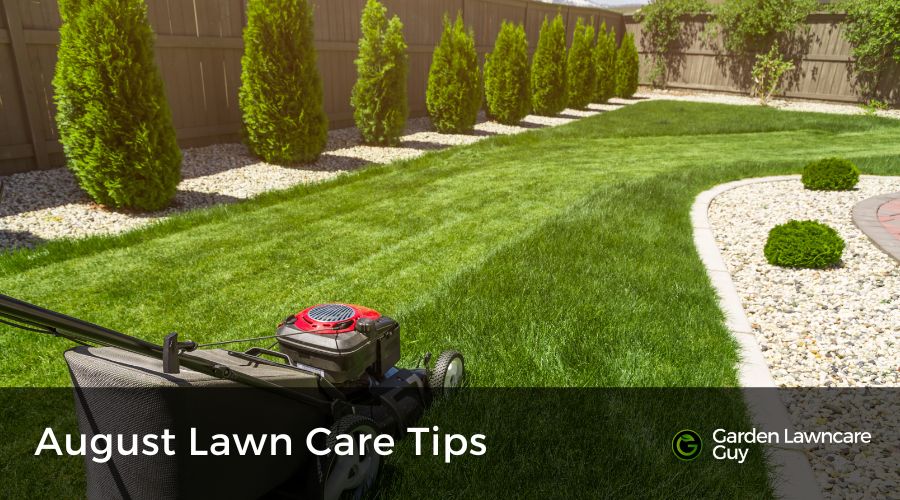
August is an important month for lawn care as the intense summer heat can stress your grass, leading to dry patches, thinning, and increased vulnerability to diseases and pests.
This article will cover smart mowing, drought‑savvy watering, feeding, quick repairs, and how to prepare for the recovery that autumn brings. The aim is simple: fewer brown patches, steadier colour, and a lawn that stays resilient.
- Why August Lawns Struggle
- Effective Quick tips for August
- Should I Water My Lawn In August In The UK?
- How Often Should I Mow The Lawn In August?
- Can I Fertilise My Lawn In August Or Should I Wait For Autumn?
- Is August A Good Time To Overseed A Lawn In The UK?
- Why Is My Grass Turning Brown In August And Will It Recover?
- How Do I Keep My Lawn Green During A Heatwave?
- Common Mistakes To Avoid
- Final Tips And Seasonal Reminder
Why August Lawns Struggle
August is often the peak of summer stress. Warm days and drying winds pull water from the soil faster than light showers can replace it.
Roots sit higher than we think, which makes grass dependent on consistent soil moisture in the top 10–15 cm. Traffic, furniture, and play can add compaction. Meanwhile, warm, humid bursts invite diseases like red thread, especially where nutrition is low.
Two big truths explain most August issues:
- Heat and moisture drive everything. When the topsoil dries out, growth slows and colour fades. In strong heat, cool‑season grasses often drift into semi‑dormancy. That is normal and reversible.
- Nutrients are a nudge, not a fix. Light nitrogen will lift colour, but it cannot replace water. Feeding a dry lawn without moisture rarely helps and can even scorch.
Keeping the above in mind lets you choose actions that matter now: mow higher, water deeply but sparingly, and use a gentle, balanced feed only when soil is moist.
Effective Quick tips for August
This is your quick August checklist:
- Raise the cut to 40–50 mm during hot spells. Closer to 30–35 mm during cooler, wetter weeks. Taller leaf shields the soil and slows evaporation.
- Mow little and often. One tidy cut per week is plenty when growth is slow. Avoid scalping edges or high spots.
- Water deeply, not daily. Aim for 20–25 mm in one go, early morning. Skip if meaningful rain is due.
- Use a wetting agent on dry‑patch areas to help water soak in and reach roots.
- Apply a balanced summer feed if colour is weak and rain is predicted within 24–48 hours, or water in well afterward.
- Overseed thin patches choose a high quality grass seed and spread evenly. Water regularly until new seeds are fully established.
- Tidy traffic zones. Rotate furniture and paddling pools weekly. Use stepping boards for regular cut‑throughs.
- Scout for disease. Pale, pinkish cast with ragged blades suggests red thread. A gentle feed and improved airflow usually help.
These core moves, done consistently, deliver the biggest return from UK lawn tips in late summer.
Recommended Products
 From: £20.99Select options This product has multiple variants. The options may be chosen on the product page
 From: £23.99Select options This product has multiple variants. The options may be chosen on the product page
 From: £15.99Select options This product has multiple variants. The options may be chosen on the product page
Should I Water My Lawn In August In The UK?
Yes, but make it count. August watering should mimic a decent summer storm. Instead of little-and-often sprinkles that only wet the top few millimetres, give one deep soak that penetrates 8–10 cm. That tells roots to stay down and reduces shallow rooting. Follow these steps:
- Measure what you apply. Set out a few straight‑sided trays or mugs. Stop when the average is 20–25 mm.
- Water at the right time. Early morning is best.
- Prioritise young or high‑value areas. If water is limited, spot‑soak new seedings, freshly edged paths, and sunny south‑facing strips first.
- Check infiltration. If water beads on the surface or runs off, apply a liquid wetting agent to help it penetrate the soil. There are many benefits of using wetting agent on your lawn.
If rainfall arrives in a meaningful burst, skip the hose. In August, one good drink followed by a dry break is better than constant dabbing.
How Often Should I Mow The Lawn In August?
Aim for a weekly cut in average conditions. You are not chasing speed of growth but steadiness of colour and texture. The rules of thumb:
- Height: 40–50 mm in heat and drought. 30–35 mm if the month turns cooler and wetter toward the end.
- Frequency: Every 7–10 days in slow growth, more often only if the lawn surges after rain.
- Blade care: Keep blades sharp to avoid tearing, which whitens tips and invites disease.
- Clippings: In dry spells, consider grass‑cycling. Short clippings return moisture and a touch of nitrogen. If clumps form, rake lightly.
Avoid cutting when the lawn is wilted. If you return from holiday to a shaggy sward, drop the height in stages over two or three mows rather than scalping in one go.
Can I Fertilise My Lawn In August Or Should I Wait For Autumn?
You can, but ensure moisture is available and ensure to follow application instructions and spread evenly. Please read our lawn feed guide for more information.
August is a bridge between high summer and early autumn. A modest, balanced summer feed can perk up colour, especially after heavy rain has leached nutrients. Keep it simple:
- Choose a gentle formulation suited to warm weather, with controlled nitrogen that does not force soft growth.
- Target timing to coincide with rainfall within a day or two, or water it in with your deep soak.
- Avoid feeding in the heat of the day or onto dry, stressed turf.
- Consider a liquid tonic if you want a quicker lift during a mild spell.
When nights start cooling in late August, the lawn often responds well to a tidy‑up feed. Save heavier feeding for September once growth is steadier.
Is August A Good Time To Overseed A Lawn In The UK?
Yes. Warm soil, adequate daylight, and the first cooler nights make late August excellent for germination. Overseeding now thickens the sward before autumn. Here is a simple plan:
- Rake and remove thatch from thin areas to create soil contact. A spring‑tine rake is usually enough for patches.
- Topdress lightly with a fine, sandy loam if the surface is uneven.
- Sow at patch‑repair rate and broadcast evenly. Use a hand spreader to achieve even coverage.
- Press seed to soil with the back of a rake or a light board.
- Water gently after sowing. Keep the surface evenly moist until new seed is fully established, never waterlogged.
- Protect from traffic stay off new seeded areas until the first cut.
- First mow high, then gradually reduce, following the main lawn schedule.
Why Is My Grass Turning Brown In August And Will It Recover?
Brown grass in August usually falls into one of four causes. Use this quick guide to decide what to do.
- Heat dormancy: Entire lawn looks straw‑brown after hot, dry weeks, but crowns are intact. Remedy: Raise the cut, hold off heavy feeding, and give a single deep soak every 7–10 days if allowed. Expect recovery with the first proper rain.
- Dry patch: Random brown patches with water pooling. Remedy: Fork the area, apply a wetting agent, and follow with a measured soak.
- Disease such as red thread: Pinkish cast and ragged tips after humid periods. Remedy: Improve airflow by mowing tidy, remove dew with a light brush in the morning, and apply a modest feed to boost recovery.
- Dog spots or high traffic: Localised burn or compaction in repeated paths. Remedy: Flush with water, rake out dead matter, top up with seed and a pinch of soil, and rest from use for two weeks.
In most cases, established lawns do recover once cooler, wetter weather returns in early autumn. Patience and consistent August lawn care make the difference.
How Do I Keep My Lawn Green During A Heatwave?
Green in a heatwave is about conservation and protection, not perfection. Focus on these tactics:
- Shade and rotate: Move furniture, slides, and paddling pools every few days. Temporary shade over the hottest hours helps new seedlings.
- Mulch mow: Leave light clippings to slow drying and add organic matter.
- Soak, then pause: Provide one deep irrigation, then wait. Do not spritz daily.
- Wetting agent on trouble spots: Treat hydrophobic patches before watering to reduce waste.
- Traffic control: Place stepping boards along regular routes to the bin or shed.
- Edge care: Edges dry first. Hand water edges and narrow strips where sprinklers miss.
If restrictions prevent watering, concentrate on resilience: raise the cut, grass‑cycle, and plan an early autumn tune‑up with aeration and a proper feed. That combination keeps lawn green in summer for longer and speeds recovery when the weather shifts.
Common Mistakes To Avoid
- Scalping during heat. Dropping the mower too low exposes the soil and bakes the crown. Keep August heights higher and reduce gradually later.
- Feeding a dry lawn. Granular feed on parched turf can scorch and will not be taken up. Always apply onto moist soil and water in.
- Daily sprinkling. Light, frequent watering promotes shallow roots and wastes water. Measure and soak deeply.
- Ignoring edges and high spots. They dry first. Hand water or spot‑treat with wetting agent before the rest of the lawn.
- Overseeding without contact. Seed needs soil. Scarify or rake to open the surface, then press seed in.
Final Tips And Seasonal Reminder
August is your maintenance month. Keep things ticking with higher cuts, measured water, and small, well‑timed interventions. Use UK lawn tips that respect the weather you actually have, not the one you hoped for. If you are away, raise the cut before you leave and ask a neighbour for one deep soak mid‑trip if allowed.
When you are back, tidy the edges, brush off debris, and check for dry patches to treat with a wetting agent. Remember, September is the big recovery window. The effort you put into August sets up everything that follows: stronger roots, thicker sward, fewer weeds, and steadier colour.
Bestselling Lawncare Products
- From: £23.99Select options This product has multiple variants. The options may be chosen on the product page
- From: £20.99Select options This product has multiple variants. The options may be chosen on the product page
 From: £15.99Select options This product has multiple variants. The options may be chosen on the product page